Is Your Website Secure? AI Is Changing How Hackers and Developers Find Vulnerabilities
A website that looks normal may still carry security risks. As AI becomes more capable of analyzing code, businesses need to understand how application vulnerabilities can threaten customer data and operations, and what steps they can take to protect their digital systems.
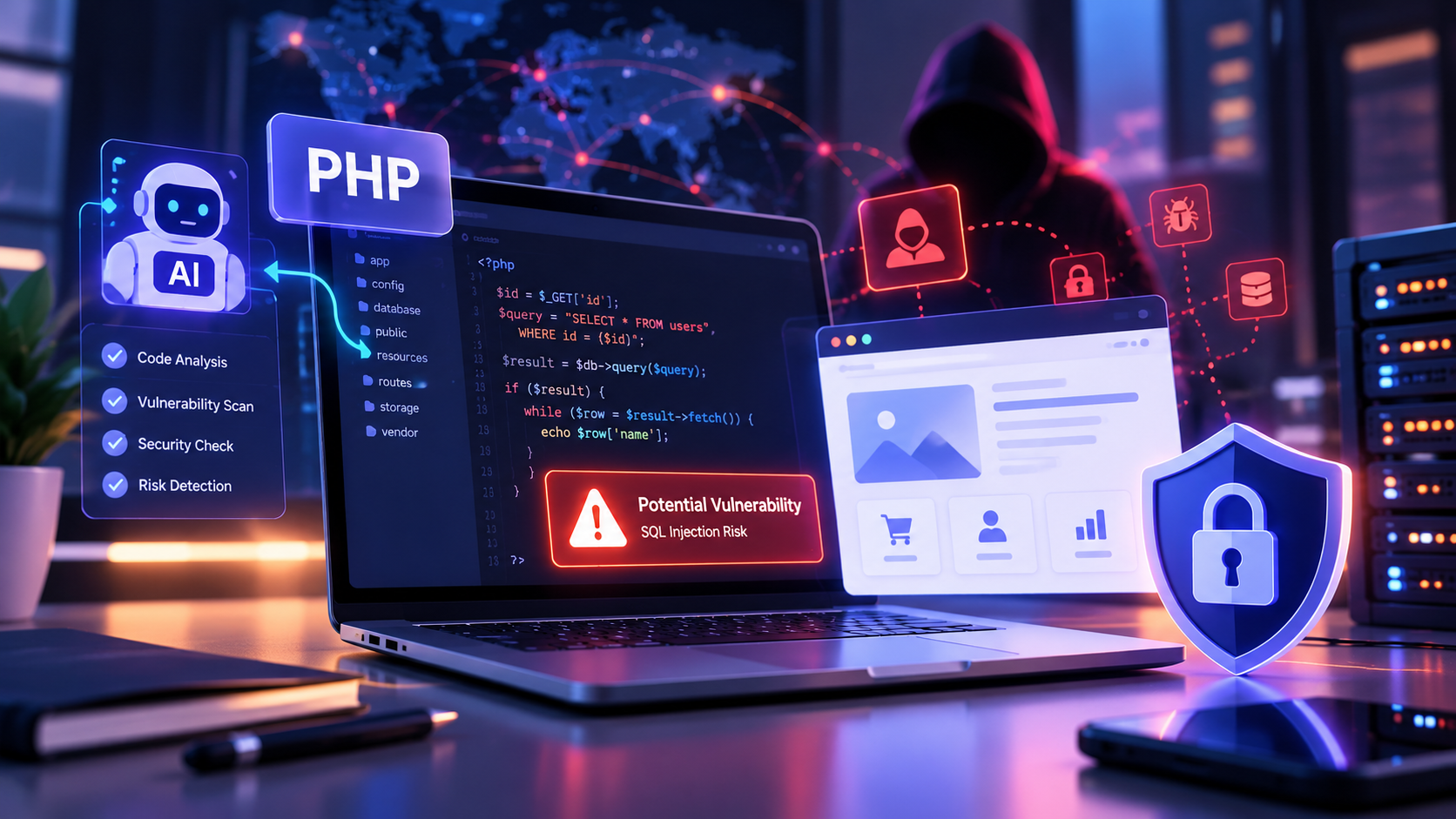
Is Your Website Secure? AI Is Changing How Hackers and Developers Find Vulnerabilities
Your company website is accessible. Customer forms work. Transactions continue as usual.
But have you ever asked whether the system behind your website is actually secure?
Website security often becomes a priority only after something goes wrong. Yet application weaknesses can remain hidden behind a normal-looking interface. A mistake in data handling, server configuration, or the use of outdated components can become the starting point of a security problem.
Artificial intelligence (AI) is now changing how software is analyzed. AI can help read code, recognize risky patterns, and accelerate application reviews.
For business owners, this development carries an important message: a website is not simply a digital asset that needs to look good. It is a system that needs to be protected.
PHP Is Widely Used, but Still Needs Security Maintenance
PHP has long been used to build different types of websites and business applications, including company profiles, online stores, customer portals, and internal administrative systems.
The popularity of a technology does not automatically make every application secure. Risks depend on how the technology is implemented and maintained.
For example, an application may use components that no longer receive security updates. Another system may allow users to access data without adequate permission checks.
When such weaknesses are discovered, the impact can vary. Some require a straightforward update, while others may require a broader review of the application and server.
AI Is Making Code Reviews Faster
Imagine a developer examining thousands of lines of code to identify mistakes that could put an application at risk.
AI can help simplify that task by highlighting suspicious patterns, explaining potential issues, and suggesting improvements.
However, AI is not always correct. Its findings need to be tested and confirmed by technical professionals. A code fragment that appears risky is not necessarily exploitable under the application's actual conditions.
For businesses, the important question is not simply whether AI can identify vulnerabilities, but whether system owners have a process for addressing those findings.
One Technical Weakness Can Become a Business Problem
For companies, security risks extend beyond source code.
Customer data is at stake
Websites may store names, phone numbers, email addresses, and transaction histories.
If a system weakness enables unauthorized access, a company may face information exposure, investigations, and declining customer trust.
Operations may be disrupted
Imagine a booking application becoming unavailable when customers want to place orders. Or an internal dashboard having to be temporarily closed after suspicious activity is detected.
Such disruptions can affect employee productivity and customer service.
Remediation costs arrive at the wrong time
When an incident occurs, companies may need code reviews, system updates, data recovery, and additional testing.
Without reliable backups or system documentation, recovery can take longer and cost more.
What Can Business Owners Do Now?
You do not need to understand every line of PHP code to begin securing your website.
Start by asking your IT team or website provider:
Are PHP, framework, and website components still receiving security updates?
Are there known vulnerabilities affecting the versions currently in use?
When was the website last reviewed for security?
Do administrator and employee accounts have appropriate access restrictions?
Are backups available and tested for recovery?
If a relevant vulnerability is identified, ask the technical team to prepare remediation based on official recommendations, test the changes, and apply updates safely.
Do not wait for a website disruption before reviewing the system.
Website Security Is Part of Business Strategy
As AI advances, software security becomes increasingly important for companies that rely on technology to serve customers and run their operations.
A good website is not only fast, attractive, and easy to use. It must also be maintained, monitored, and updated so security risks can be managed.
Ultimately, the technology that supports business growth must remain trustworthy as the business grows.